Pulse of the Plant: Smart Machinery Health Monitoring
Industrial maintenance is undergoing a structural shift from reactive and preventive models to data-driven predictive maintenance (PdM). Traditionally, machinery was serviced on a fixed schedule (prev
Predictive Maintenance Transition
Industrial maintenance is undergoing a structural shift from reactive and preventive models to data-driven predictive maintenance (PdM). Traditionally, machinery was serviced on a fixed schedule (preventive) or repaired after failure (reactive). Both methods incur high costs: the former through unnecessary downtime and parts replacement, the latter through catastrophic production loss.
Predictive maintenance utilizes real-time condition monitoring to identify the onset of mechanical degradation. By analyzing vibration, temperature, and electrical signatures, plant managers can schedule repairs during planned outages.
Statistical Outcomes of PdM Implementation:
- Downtime Reduction: Up to 70%.
- Asset Life Extension: 20% to 40%.
- Maintenance Cost Reduction: 25% to 30%.
- Energy Efficiency Gain: Approximately 10% through optimized operation.
ABB Ability™ Smart Sensors for LV Motors
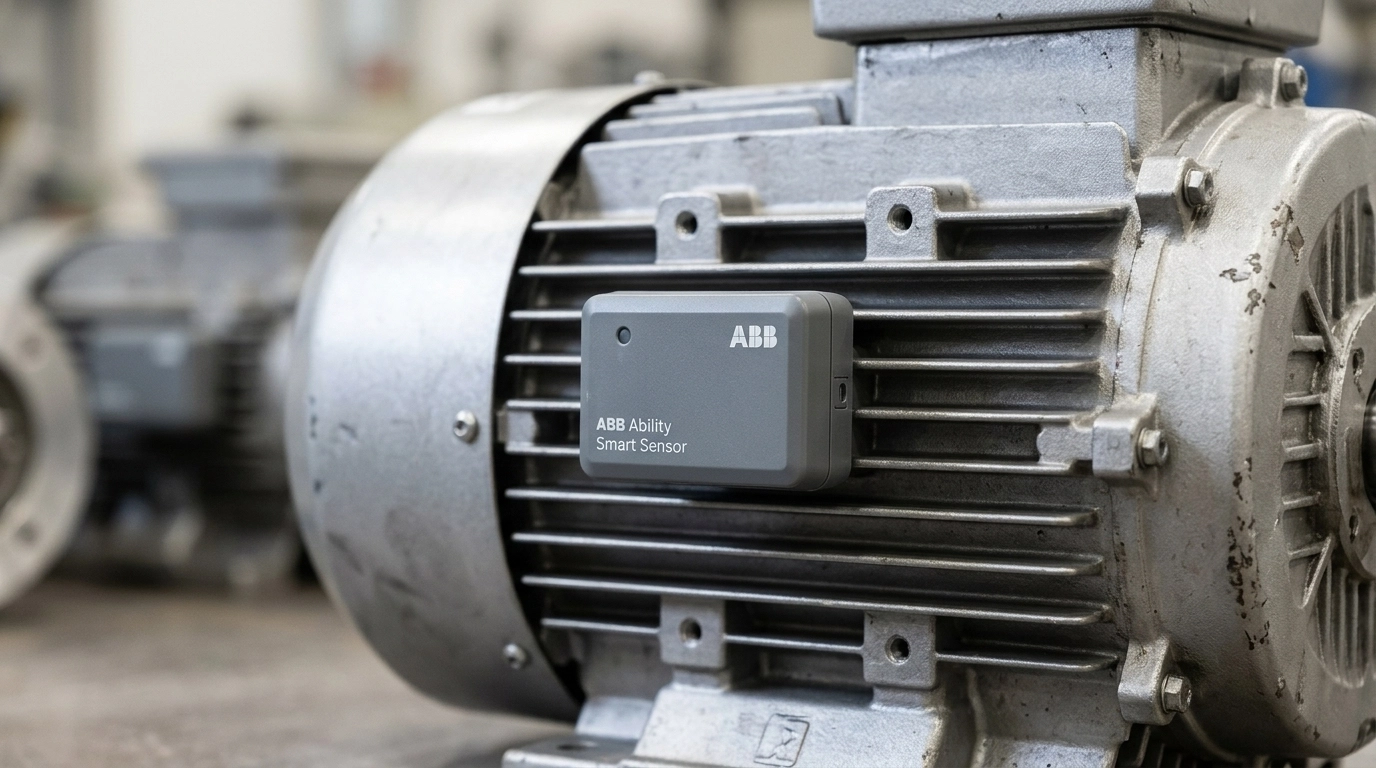
Low voltage (LV) motors are the primary drivers of industrial processes. Historically, monitoring these assets was cost-prohibitive compared to their replacement value. The ABB Ability™ Smart Sensor changes this economic calculation.
Technical Specifications
The smart sensor is a compact, wireless device that attaches directly to the motor frame. It captures data on key health parameters without complex wiring or integration into existing PLC systems.
- Vibration Monitoring: Detects bearing issues, misalignment, and imbalance by tracking tri-axial vibration patterns.
- Temperature Tracking: Monitors cooling efficiency and detects internal friction or winding issues.
- Acoustic Sensing: Ultrasonic sensors identify early-stage bearing wear before thermal or vibration indicators become prominent.
- Connectivity: Utilizes Bluetooth Low Energy (BLE) to transmit data to a gateway or mobile device, which then uploads it to a secure cloud server for algorithmic analysis.
Implementation Impact
By converting standard LV motors into smart, connected assets, facility managers gain a fleet-wide overview of motor health. The system automatically generates alerts when parameters exceed pre-set thresholds, allowing for targeted intervention rather than broad-spectrum inspections.
Fluke Diagnostic Tools: Handheld Precision
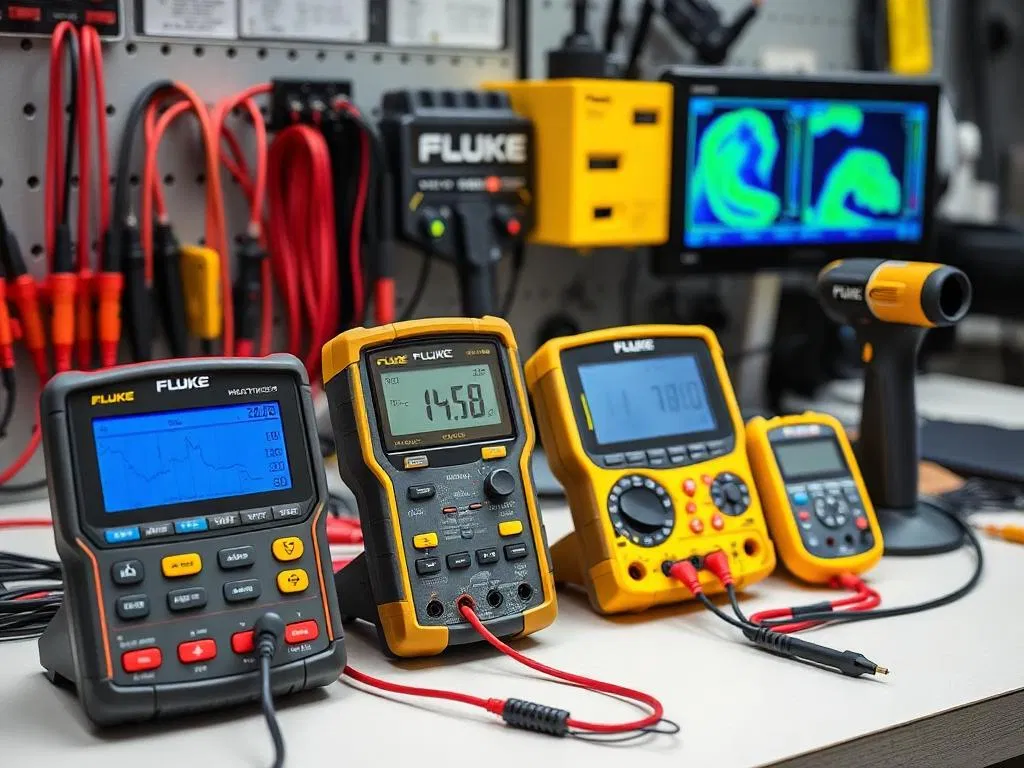
While integrated sensors provide continuous monitoring, Fluke measurement instruments provide the high-resolution diagnostic data required for root cause analysis and validation.
Thermal Imaging
Thermal anomalies are often the first sign of electrical or mechanical stress. Fluke thermal cameras identify:
- Loose Connections: High-resistance points in switchgear and control panels.
- Overloaded Circuits: Excessive heat in cables and breakers.
- Mechanical Friction: Hotspots in bearings, gearboxes, and belts.
Vibration Analysis (Fluke 805 & 810)
The Fluke 805 Vibration Meter provides a quick "Go/No-Go" assessment of machinery health. For more complex diagnostics, the Fluke 810 Vibration Tester utilizes a diagnostic engine to identify the specific nature of a fault.
- Automatic Diagnosis: The 810 identifies the four most common mechanical faults: bearing failure, misalignment, unbalance, and looseness.
- Severity Rating: Assigns a severity level to the fault, indicating whether immediate action is required or if the asset can continue running until the next shift change.
Drive-Based Condition Monitoring: ABB ACS880
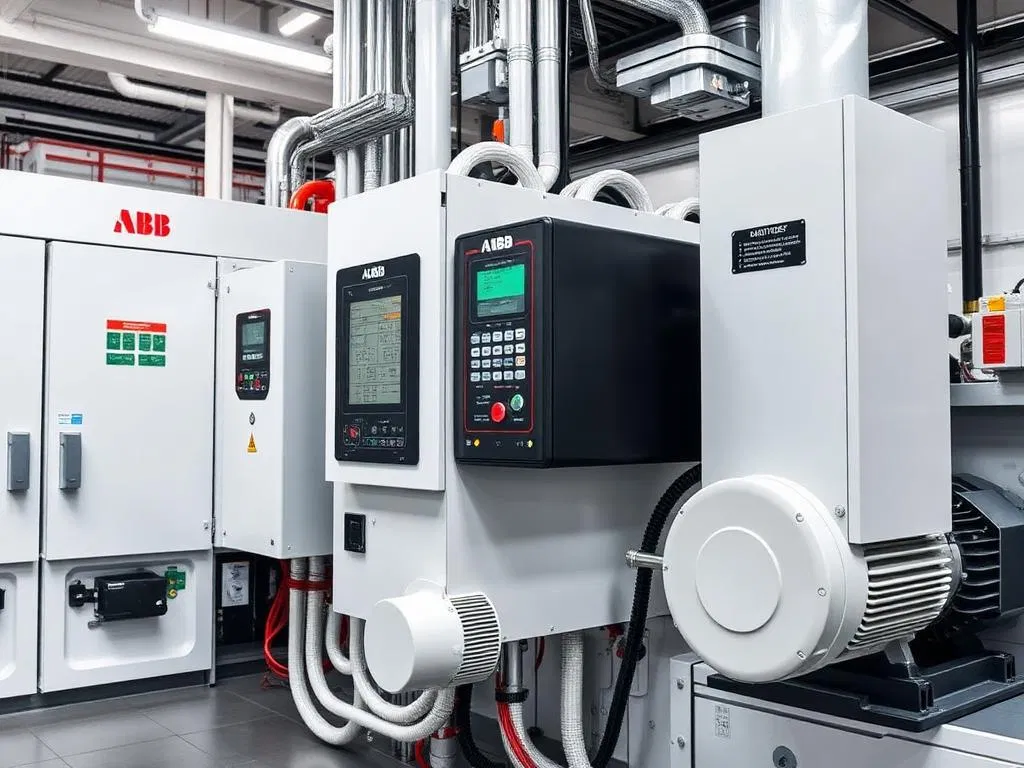
Advanced Variable Frequency Drives (VFDs) like the ABB ACS880 series do more than control motor speed; they act as process sensors. Because the drive is situated between the power grid and the motor, it has a high-fidelity view of the motor’s torque and load characteristics.
Direct Torque Control (DTC)
The ACS880 utilizes Direct Torque Control technology, which provides a torque rise time of approximately 5 milliseconds. This high-speed response allows the drive to detect instantaneous torque transients that traditional VFDs would miss.
Load Profile Monitoring
The drive allows for the programming of "Load Curves." These curves establish a baseline of normal operation for a specific application: such as a conveyor, fan, or pump.
- Overload Detection: Identifies mechanical jams or increased friction in the process.
- Underload Detection: Detects belt breaks, pump cavitation, or dry running.
- Anomaly Logging: Every event is timestamped and logged, providing a digital paper trail for troubleshooting process interruptions.
ROI and Economic Justification
The investment in machinery health monitoring is justified through direct and indirect cost savings.
Asset Lifecycle Management
Extending asset life by 20-40% significantly defers capital expenditure. By maintaining motors and drives in optimal condition, the rate of insulation degradation and bearing wear is slowed.
Energy Optimization
Faulty equipment consumes more power. A motor with a misaligned shaft or worn bearings requires higher current to maintain the same output. Predictive monitoring ensures assets operate at peak efficiency, contributing to ESG (Environmental, Social, and Governance) targets and reducing utility costs.
Labor Efficiency
Condition-based maintenance allows maintenance teams to focus their efforts where they are truly needed. Instead of checking 100 motors monthly, the team can focus on the three motors identified as "at risk" by the smart sensors and Fluke diagnostic tools.
Digital Controls: Authorized Integration and Support
Digital Controls serves as the bridge between advanced technology and industrial application. As an authorized partner for both ABB and Fluke, we provide genuine hardware backed by technical expertise.
Our Capability Spectrum
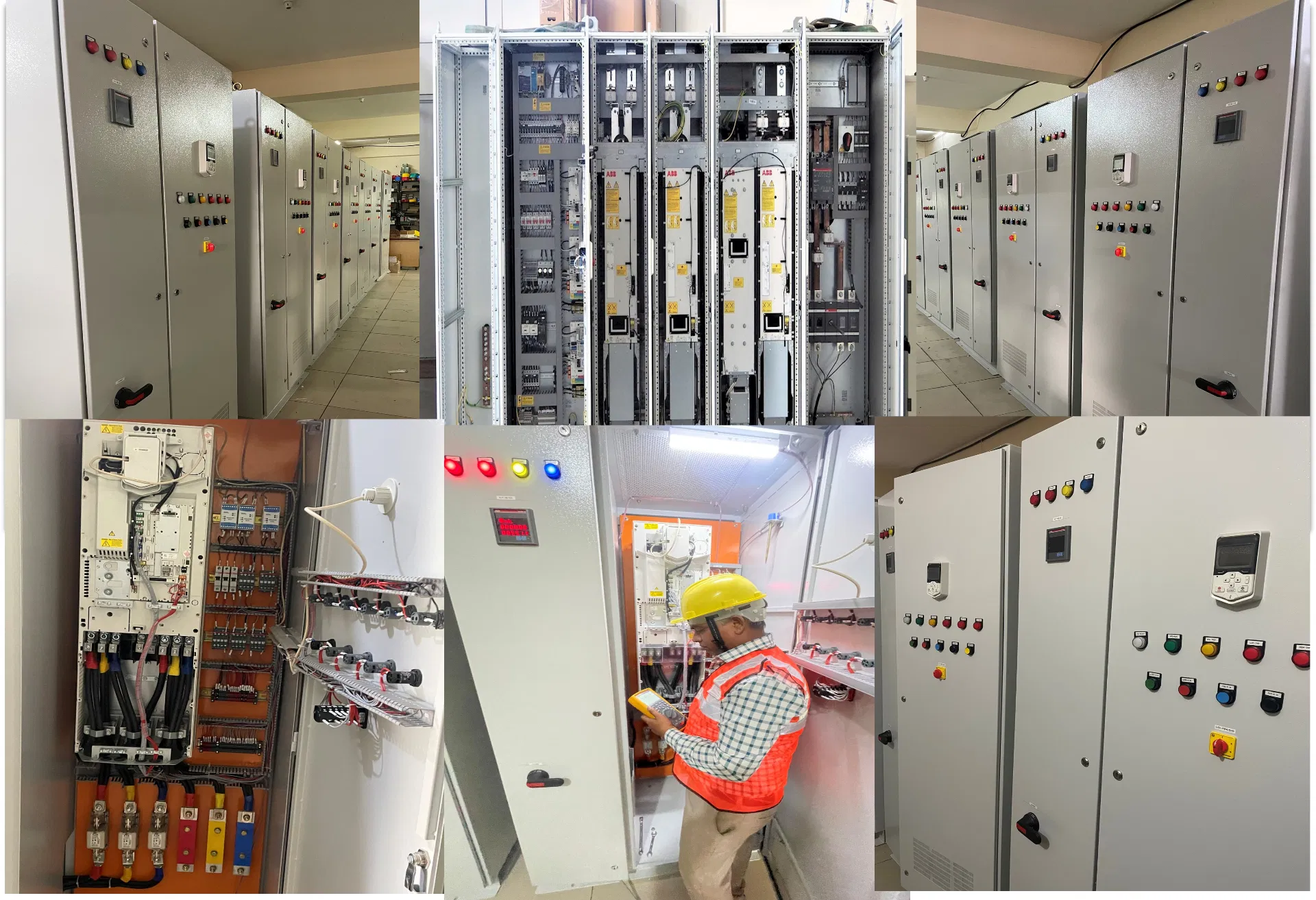
- Turnkey Systems: Design and manufacture of custom control panels integrated with ABB drives and PLCs.
- System Integration: Full-stack automation from field-level sensors to SCADA systems.
- Technical Support: In-depth support for drive commissioning, PLC programming, and vibration analysis setup.
- Geographic Reach: Pan-India service delivery with the capability to support global industrial projects.

Digital Controls provides the hardware, software, and engineering services required to transform a standard plant into a smart, self-monitoring facility. By integrating ABB Ability™ sensors with Fluke's diagnostic precision and ACS880 drive intelligence, we ensure your plant maintains its pulse without interruption.
For technical inquiries or a system assessment, contact our engineering team via our enquiry page.