Project Story
Revolutionizing Offshore Drilling Operations Through PLC-Based Automation
The offshore drilling operation was transformed by replacing outdated SCR systems with advanced PLC-based automation, significantly improving control, reliability, and efficiency. The upgrade delivered measurable results, including reduced downtime, 20–30% higher drilling performance, and optimized energy usage. This transformation enabled safer, faster, and more scalable operations—driving substantial cost savings and long-term operational growth.
1. Executive Overview
In high-risk, high-investment industries like offshore drilling, even minor inefficiencies can lead to massive operational losses, safety risks, and downtime costs.
A leading offshore drilling industry was facing significant performance challenges due to outdated control systems managing critical operations such as Top Drive and Mud Pumps.
Through a strategic automation retrofit using PLC-based systems, the entire control architecture was transformed—resulting in higher efficiency, reduced downtime, improved safety, and measurable performance gains.
2. The Challenge: Aging Systems Limiting Performance
The existing infrastructure relied heavily on legacy SCR (Silicon Controlled Rectifier) systems and conventional DC drives, which created multiple operational bottlenecks:
Frequent Downtime (High NPT – Non-Productive Time) Aging systems caused recurring interruptions, impacting drilling schedules and productivity. Poor Load Sharing in Mud Pumps Parallel DC motors failed to distribute load efficiently, leading to mechanical stress and inefficiency. Limited Control Accuracy Critical operations like top drive control lacked precision in speed and torque management. High Maintenance Requirements Legacy systems required constant manual intervention and frequent repairs. Space Constraints Offshore rigs have limited footprint, making upgrades complex and time-sensitive.
3. The Solution: Intelligent PLC-Based Retrofit
A complete modernization strategy was implemented to replace outdated systems with a compact, high-performance PLC-driven architecture.
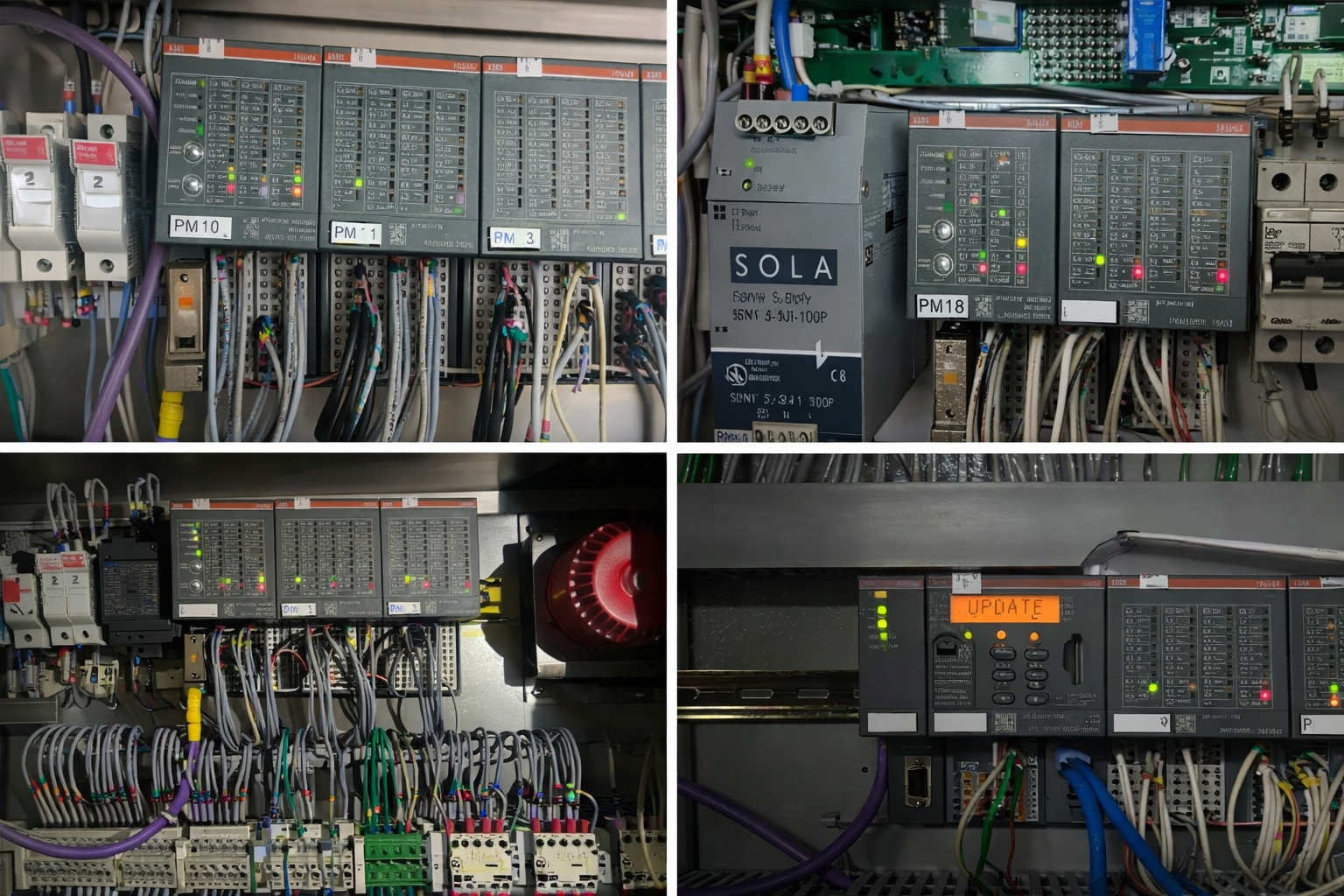
Key Components of the Upgrade: PLC-Based Central Control System Enabled real-time monitoring, intelligent control, and seamless coordination of multiple operations. Advanced Drive Systems (Replacing SCR Panels) Installed 7 new DC drive cabinets with enhanced control capabilities. Remote I/O Integration (Profibus Communication) 9 remote I/O panels ensured efficient communication across distributed systems. Multi-Equipment Control Capability Single system capable of managing: 3 Mud Pumps 2 Draw-Works Motors 1 Top Drive System
4. Engineering Excellence: Key Innovations Implemented
This project was not just a replacement—it was a performance engineering breakthrough.
Highlights: Real-Time Load Balancing (Current Mirror Logic) PLC-enabled control ensured equal load sharing across parallel motors, eliminating inefficiencies. Enhanced Speed & Torque Control Precise control improved drilling accuracy and operational consistency. Space-Optimized Retrofit Design New systems were engineered to fit within existing infrastructure, minimizing redesign efforts. Reduced Human Dependency Automation replaced manual interventions, improving reliability and consistency.
5. Measurable Impact: From Operational Strain to Optimized Performanc
The transformation delivered clear, quantifiable improvements:
Key Results: Downtime Reduction: Significant drop in non-productive time (NPT) → Increased operational uptime Rate of Penetration (ROP): Improved by 20–30% → Faster drilling cycles and higher productivity Energy Efficiency: Optimized motor load sharing reduced power consumption → Lower operational costs Maintenance Reduction: Faster servicing with improved system diagnostics → Reduced maintenance time and cost Flow Rate Improvement: Achieved up to 25% increase → Enhanced system performance without additional equipment investment
6. Safety & Reliability: A Critical Upgrade
In offshore environments, safety is non-negotiable.
The PLC-based automation introduced:
Consistent and Predictable Operations Reduced Manual Intervention Improved Control During Critical Processes (e.g., Tripping Operations)
This significantly enhanced operational safety and risk management.
7. The Bigger Business Impact
This transformation was not just technical—it delivered strategic business value:
Less Downtime → More Output → Higher Revenue Better Control → Improved Quality → Reduced Risk Energy Optimization → Cost Savings → Better Margins Automation → Scalability → Future-Ready Operations 8. Conclusion: From Legacy Constraints to High-Performance Operations
This offshore retrofit demonstrates how modern automation can redefine industrial performance.
What started as a challenge of outdated systems evolved into:
A highly efficient, automated drilling operation A cost-optimized and energy-efficient system A safer, smarter, and scalable infrastructure
Ultimately, the shift to PLC-based automation enabled the industry to move from reactive maintenance to proactive performance optimization—unlocking exponential operational growth.